All Categories
Featured
Table of Contents
According to the paper's authors Ashish Arora, Sharon Belenzon, Larisa C. Cioaca, Lia Sheer and Hansen Zhang, this boom-time duration in greater education has corresponded with a global efficiency downturn. Talking about the paper, The Economic expert discusses how employee output per hour in the 1950s and 1960s grew by 4 percent in developed economies whereas today efficiency development is at a laggard rate of less than one percent; its verdict is that 'universities' blistering development and the rich world's stagnant productivity might be 2 sides of the very same coin'.
Tough anti-monopoly laws in the 1950s and 60s at first drove the growth of big corporate labs studying in-house, since there were unable to get the intellectual residential or commercial property of competing firms. When the rules on competition were relaxed in the 1970s and 80s, at the same time as the growth of university research study, company managers became convinced that they didn't require to invest in their own costly R&D labs.
Using a complicated method, the paper's authors have actually examined the effects gradually and reached a scathing judgement on scientific innovation conducted by publicly funded institutions, arguing that they 'elicit little or no reaction from developed corporations' and therefore stop working to move the dial generally on enhancing financial performance. They further recommend that the large numbers of academic patents make industries less likely to innovate themselves for fear of competitors from university spinouts.
Big pharma is leading the charge on keeping R&D inhouse, while also keeping tabs on university inventions. Is huge tech, especially in relation to artificial intelligence. The automobile sector is scanning the horizon as self-governing and electric lorries ready to change our roadways. In all of these locations, we can discover outstanding office style jobs.
Complete Framework to Tech TransformationThe two huge battalions of development may merely need to discover to coexist and collaborate more successfully in the future, with business discovering much better methods to equate scholastic ideas for economic gain and public researchers working more difficult to understand what companies might need. Then you do not actually require to PhD to work that one out.
Complete Framework to Tech Transformation
Key Tactics for Operating Modern R&D Hubs
'The Effect of Public Science on Corporate R&D'. National Bureau of Economic Research study, working paper, November 2023.
In an age of environment seriousness, social need, and regulative intricacy, innovation has a brand-new mission: sustainability. Corporations can no longer manage to view R&D exclusively as a lorry for competitive edge or profit maximization. Today, corporate research and advancement need to function as a driver for environment options, inclusive organization designs, and regenerative environments.
These companies are turning to sustainability-led R&D to create development innovations, safe intellectual residential or commercial property that allows circular economies, and deliver scalable impact. At McBride Corp Mexico, our Development & Sustainability Consulting practice assists companies straighten their R&D efforts with ESG targets, worth production, and worldwide reporting expectations. This improvement isn't practically complianceit's about future-proofing your company.
Investors are requiring to see green development in ESG disclosures. Governments are providing rewards for sustainable patents and technologies. Consumers want smarter, cleaner, more ethical products. What does sustainable development look like in the business R&D pipeline? Bio-based alternatives to plastics Carbon-negative products and cement Low-energy information centers and IoT networks Closed-loop systems for water and energy use Smart packaging and circular item styles Precision farming, sustainable mining, or green chemistry These developments do not emerge from chancethey result from structured R&D programs infused with ecological insight, ethical risk evaluations, and systems believing.
According to the World Intellectual Home Organization (WIPO), the variety of patents filed under the "green innovations" category has actually more than doubled in the past decade. Sustainable patents show developments that: Lower carbon emissions or energy utilize Improve resource performance Minimize toxicity or waste Assistance ecological tracking or remediation These patents are not just protective assetsthey are strategic differentiators.
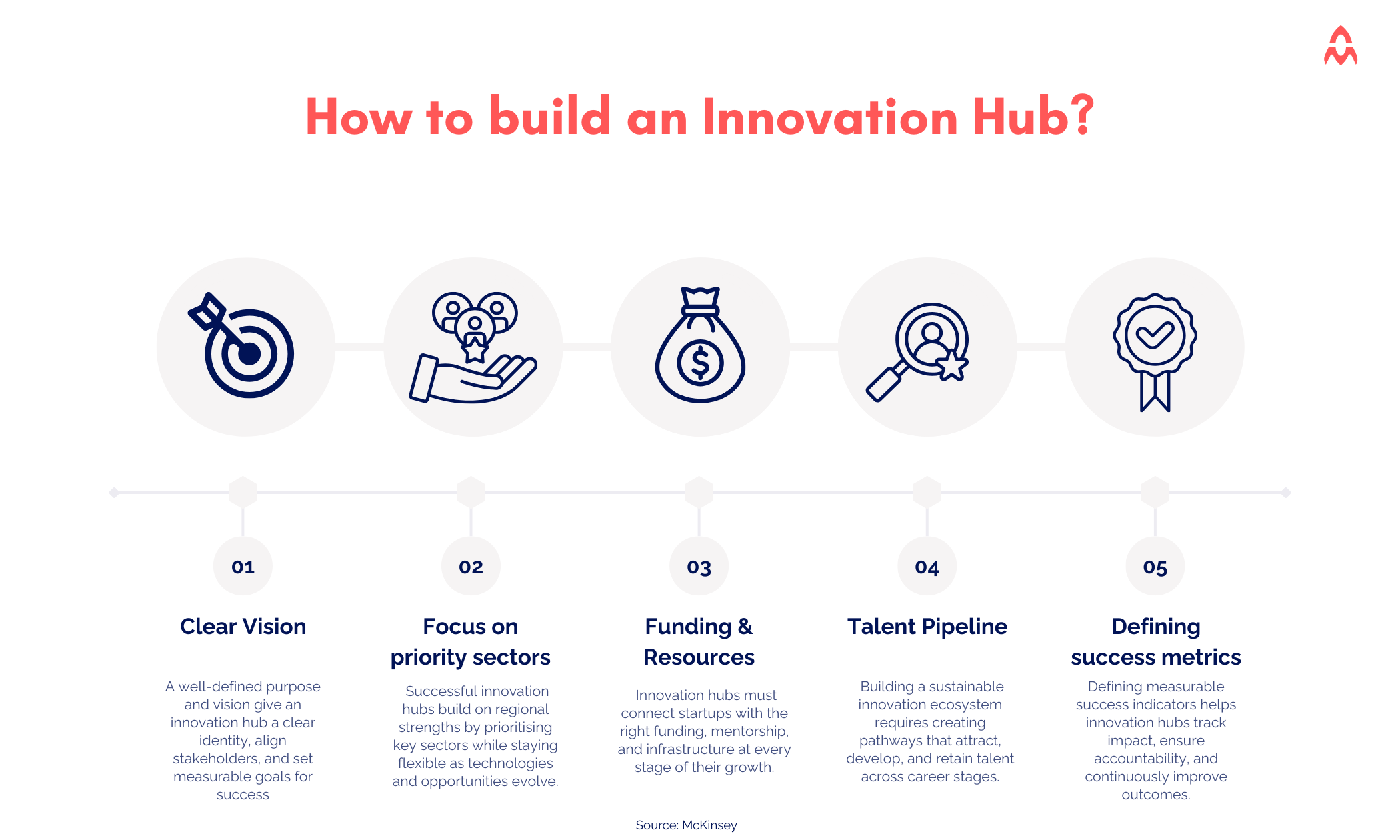
Key Tactics for Operating Modern Innovation Hubs
Let's check out a few of the most appealing sustainable tech developments driven by business R&D groups worldwide. Automotive and heavy markets are investing billions into electrical drivetrains, solid-state batteries, and green hydrogen. R&D in product sciences, electrolyzers, and fuel cell systems is vital to making these technologies cost effective and scalable. From direct air capture startups to seal business embedding CO in developing products, CCUS is one of the most patent-intensive areas of environment development.
Bioengineered enzymes that break down plastic, microbial fuel cells, and lab-grown meat are redefining sustainability frontiers. These services emerge at the crossway of life sciences and ESG-aligned service designs. AI is speeding up product discovery, optimizing energy systems, and enabling real-time ESG information analysis. R&D in ethical AI ensures that sustainability benefits are inclusive and liable.

Latest Posts
Why Modern Innovation Labs Lead Transformation
A Complete Modern Enterprise Tech Roadmap
Leveraging Modern Tech Innovation Cycles in 2026